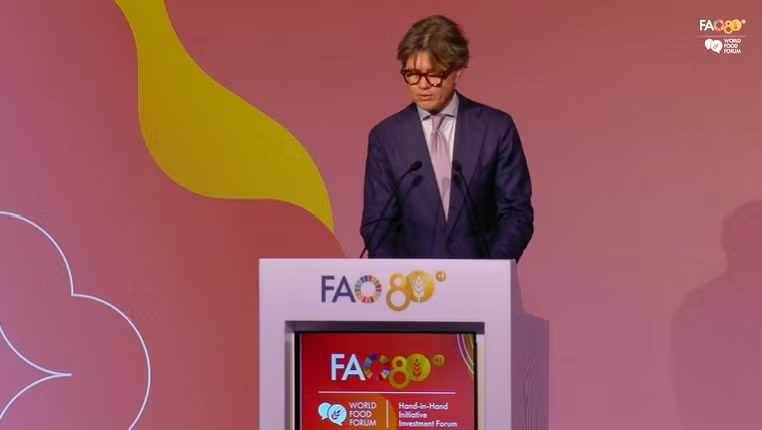
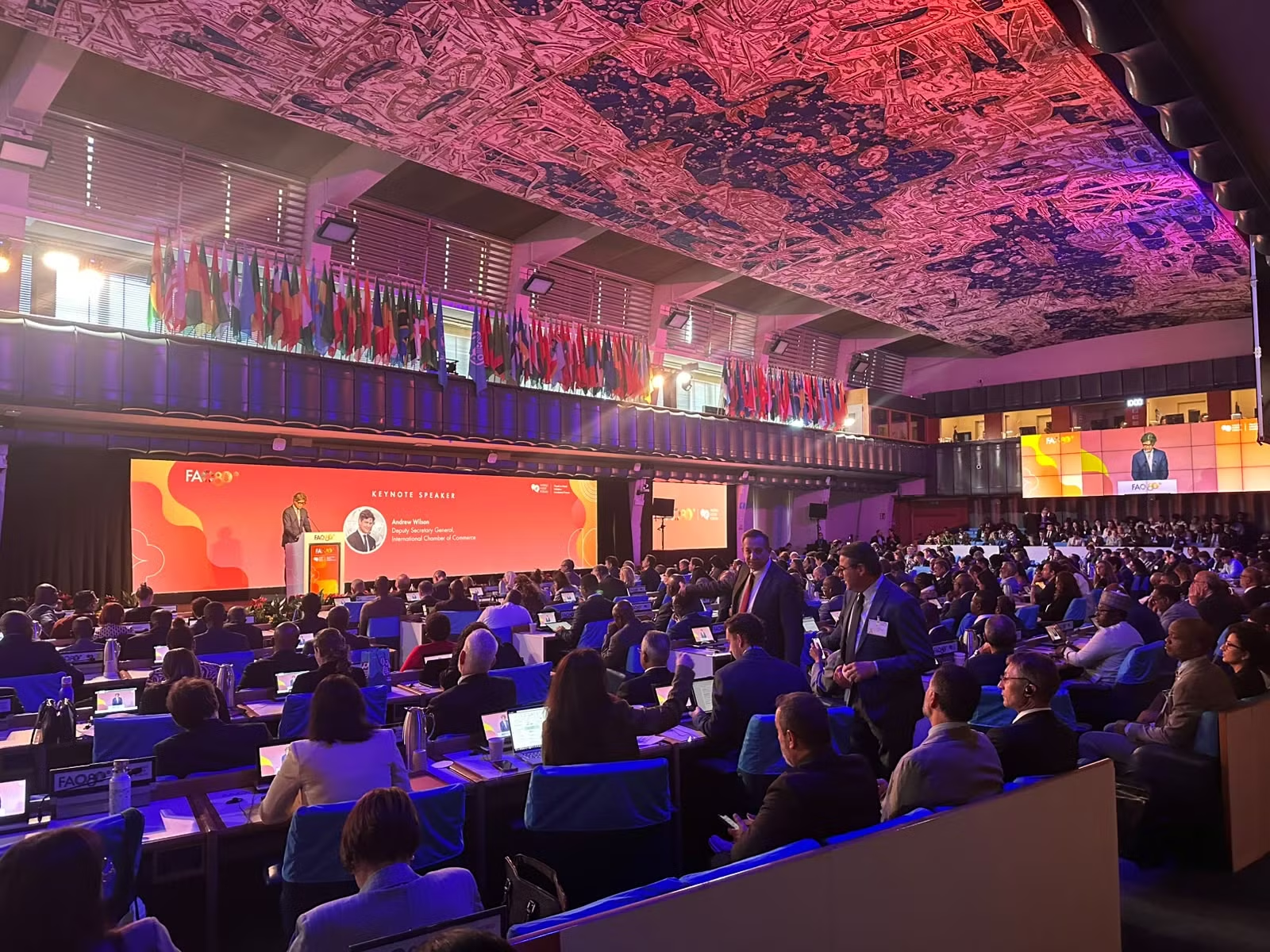
Highlighting the impact of disruptions to shipping through the Strait of Hormuz and the Black Sea, Mr Wilson outlined ICC’s work with the UN to facilitate shipments of fertilisers and other essential agricultural inputs, alongside efforts to restore commercial shipping in the region.
Hosted by the FAO as part of the World Food Forum, the event brings together heads of state, international organisations and private sector leaders to advance investment partnerships for sustainable food systems.
As a supporter of the Forum, ICC, the institutional representative of more than 45 million companies in over 170 countries, identified three priorities for unlocking investment:
- strengthening connections between producers and markets,
- ensuring local businesses and communities have a voice in investment projects
- and improving access to finance for farmers and smaller enterprises.
Find the full speech following:
Director-General, Excellencies, colleagues,
Behind every investment we discuss here, there is someone making a decision.
A farmer deciding what to plant. A business owner deciding whether to expand. A parent deciding what their family can afford to eat.
Our responsibility is to make those decisions a little less uncertain — and the future they lead to a little more secure.
Today, that responsibility is urgent.
Disruption in the Strait of Hormuz threatens the fertilisers needed for future harvests. Disruption in the Black Sea has severely curtailed the movement of grain that has already been harvested.
Far from those shipping routes, farmers face higher costs. Importers face tighter supplies. Vulnerable families face impossible choices about how to meet their most basic food needs.
These pressures compound the damage from extreme weather and the financial constraints facing many developing economies.
So the immediate priority is clear: keep food and essential agricultural inputs moving — safely, reliably, and at the scale the world needs.
ICC is working with the United Nations on practical arrangements to facilitate shipments of fertilisers and essential inputs through Hormuz. We are also supporting efforts to restore commercial shipping through the Black Sea.
But we are here because we know that responding to the next emergency, and then the next, is not enough.
We must invest now in food systems that give people the means to withstand those shocks — and the opportunity to build better lives.
That is the promise of Hand-in-Hand. Governments, investors and businesses working together to turn national priorities into practical progress.
To fulfil that promise, we would respectfully suggest three priorities at the outset of this Forum.
First, connect investment with markets.
Imagine a farmer who increases her harvest, only to lose it because there is no storage — or no reliable road to reach a buyer.)
She has done her part. The system around her must do its part too.
That means investment in power, transport and cold chains. It means efficient borders and predictable trade policies.
The path from a farm to a family’s table must work at every step.
Second, make local ownership the foundation of every project.
Farmers, local businesses and communities understand obstacles that may never appear in an investment prospectus.
We need their knowledge from the beginning. We need projects shaped by the people who will use them, operate them and sustain them.
And we need to ask straightforward questions.
Will this investment reduce losses? Help a business grow? Create a reliable market for a farmer’s crop?
The people closest to those questions must have a voice in the answers.
Third, make finance accessible.
Good intentions will not finance a warehouse. A national strategy will not pay for a small business’s next season.
We need well-prepared projects, clear rules and reliable contracts. We need guarantees and insurance that help viable investments proceed.
And we need affordable financing that reaches smaller enterprises and farmers — so they can help build the future we are discussing here.
ICC stands ready to bring together companies, financial institutions and public partners across sectors and borders to advance that work.
Let us leave this forum with projects closer to financing, responsibilities agreed, and next steps clear.
Because the measure of our success will be found beyond this room.
In the farmer who can invest in scaling their output.
In the business that can hire another worker.
In the family that can afford a nutritious meal.
Those are the outcomes that give our work meaning. Let us make them possible.
Thank you.
Related resources
Geopolitical shocks can disrupt food, fertiliser and other critical agricultural input markets, but history has taught us that export restrictions often make a bad situation even worse. This ICC policy paper examines how export restrictions amplify shortages, raise prices and undermine food security, while offering practical recommendations to keep global agricultural trade flowing in times of crisis.
ICC-commissioned modelling finds that severe and sustained disruption could also contribute to around one million additional diet-related deaths in 2030 and leave 67 million more people underweight. Coordinated public and private sector action is needed to keep fertilisers and agricultural inputs flowing and prevent disruptions from deepening food insecurity.
Speaking at a high-level gathering of nearly 50 government and international organisation representatives at the United Nations, ICC Secretary General John W.H. Denton AO warned that disruption to critical trade routes is placing already fragile food systems under growing strain.